The New Luxury Is a Mediterranean Summer That Doesn’t Require a Strategy
In Ibiza and Saint-Tropez, summer now comes with advance reservations, drivers on standby and an expanding set of written and unwritten rules. The appeal of the Mediterranean’s quieter corners is becoming increasingly simple: they still leave room for spontaneity.
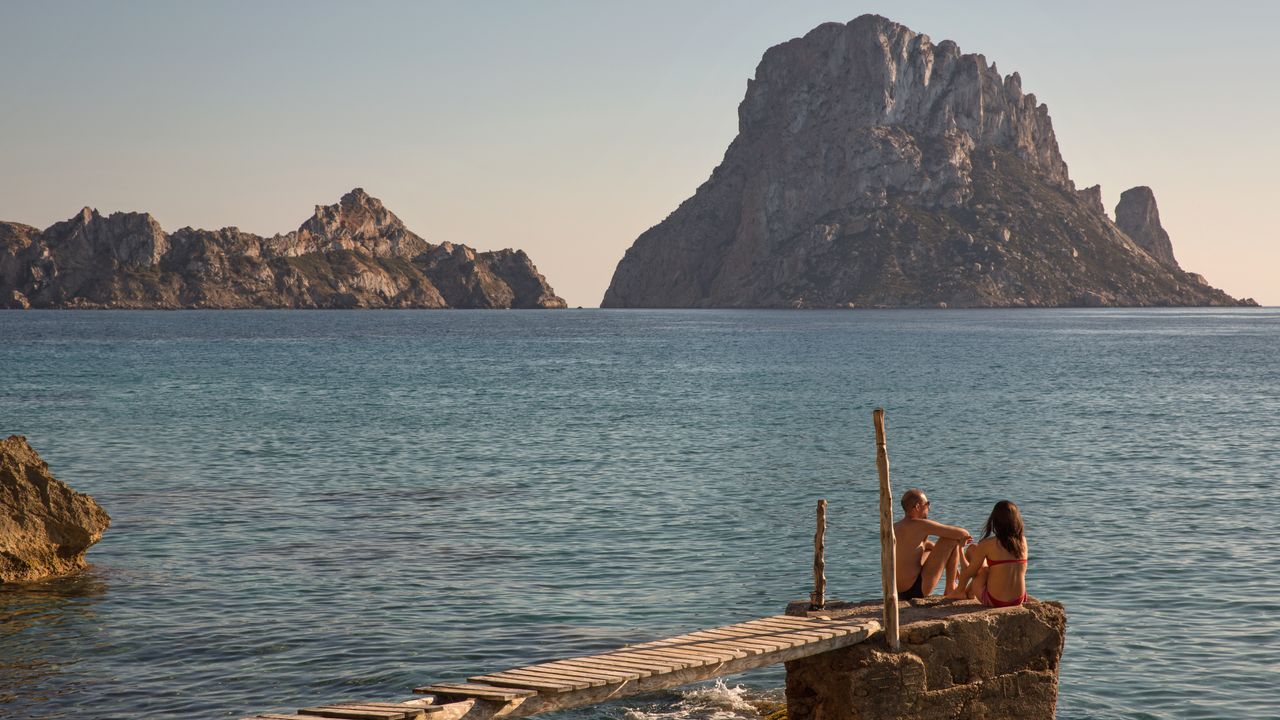
In Saint-Tropez, walking through the village in a bikini or bare-chested can earn you a fine. In Ibiza, authorities have tightened enforcement around unlicensed parties and excessive noise. These are not arbitrary attempts to make summer less fun. They are symptoms of places trying to manage what happens when too many people want the same few kilometres of coastline at the same time.
Then there are the unofficial rules.
Book the beach club weeks ahead. Have the driver waiting before lunch ends. Know which entrance to use, what not to wear and when not to take a photograph. A table that appears effortlessly secured in July may have required a concierge, several phone calls and a reservation made while everyone else was still thinking about spring.
The more casual the afternoon is supposed to look, the more organisation it can require.
Pampelonne has dozens of private beach clubs along its stretch of sand, yet peak-season reservations at the most established addresses can still be difficult to secure. In Ibiza, the famously low-key El Bigote takes reservations by telephone and serves lunch in two sittings at the end of a dirt road.
None of this makes Ibiza or Saint-Tropez less desirable. They remain two of the Mediterranean’s great summer rituals.
But desire and ease are no longer the same thing.
When a good afternoon requires a booking made in May, a driver on standby and the right linen shirt for lunch, the marginal cost of pleasure has risen while the pleasure has not.
And that is making somewhere else increasingly attractive.
The places that still leave room
Valletta is an unlikely beneficiary.
For years, Malta’s fortified capital was treated as somewhere to see between somewhere else: a few hours for St John’s Co-Cathedral, a walk through the limestone streets, then back to the resort or the airport.
The city is beginning to support a different kind of stay.
Romègas has opened inside Valletta’s walls with 22 rooms and suites, a spa and rooftop pool. Iniala has already established the more polished end of the market, with Simon Rogan’s two-Michelin-starred ION above it. Around them is a city compact enough to cross on foot, where a wine bar can occupy a centuries-old stone cellar and Friday night can still mean sitting on the steps near Bridge Bar listening to jazz.
The attraction isn’t that Valletta has suddenly become another luxury destination.
It is that it hasn’t. Yet.
There is enough hotel infrastructure to make staying comfortable without requiring the city itself to become part of a resort ecosystem. Fifteen minutes after leaving the airport, you can be inside the walls with no beach-club reservation to confirm and very little reason to make an itinerary.
Across the Grand Harbour, Birgu and the Three Cities are quieter still.
The vulnerability is obvious. Valletta is small. A handful of hotel openings can change the temperature of a place surprisingly quickly.
The Mediterranean has seen this before.
Islands where arrival still requires something
The same search for less choreographed summers is making Greek islands without airports newly interesting.
Serifos is roughly two hours by fast ferry from Piraeus. There is no runway and relatively little interest in pretending otherwise. Nōstos, a 17-key hotel run by the third generation of a hotelier family, is the kind of opening that makes the island easier to stay on without fundamentally changing the reason for going.
Amorgos asks more of you. Depending on the ferry, reaching it can take much of the day. The reward is an island where the monastery of Panagia Hozoviotissa still clings improbably to the cliff hundreds of metres above the Aegean and walking remains one of the better ways to understand the landscape.
Leros offers something stranger: the rationalist architecture of Lakki, built during the Italian occupation as a naval town, alongside coves and villages that remain largely outside the Cycladic summer circuit.
And Spetses has long understood the value of arriving without a car. By September, the worst of the summer pressure has passed, the tavernas remain open and the island settles into a rhythm that feels less performed.
None of these places is undiscovered. That isn’t the point.
They simply still contain friction of a different kind.
You wait for a ferry. You walk. You find lunch rather than reserve an entire day around it.
The inconvenience can be part of the pleasure.
The cycle has already started
Kea shows what happens next.
The island sits about an hour by ferry from Lavrio, close enough to Athens to have always been accessible but far enough from the international circuit to remain relatively discreet.
Now it has One&Only Kéa Island, with villas, a beach club, spa, tennis and padel overlooking the Aegean.
There is nothing inherently wrong with that. A great hotel can give people a reason to stay somewhere they previously overlooked.
But it also begins a familiar sequence.
A quieter island attracts travelers because it feels easier. Better hotels arrive. Access improves. Restaurants follow. More people come. Reservations become necessary. Drivers become useful. Eventually the place that offered relief from the summer machine becomes part of it.
That is the paradox behind the Mediterranean’s constant search for the next place.
The travelers leaving Ibiza for a quieter island are often bringing with them the demand that will eventually make that island more like Ibiza.
Which may be why the most valuable luxury in the Mediterranean right now is not another beach club, villa or perfectly programmed afternoon.
It is being able to wake up in July and not already know where you have to be for lunch.