The Overflow Map: What Happens to the Quiet Island Next Door
Providenciales is closing on two million visitors a year. Eight point two square miles away, South Caicos has two luxury hotels and no public transport. Panama's Bocas del Toro is one stage behind, and Hawaii's Kohala Coast shows how the story ends.
Salterra opened in early 2025 with 100 rooms. On an island of 8.2 square miles, that is not a hotel opening. It is a demographic event.
South Caicos has spent sixty years being the part of Turks and Caicos that nobody flew to. Its salt ponds were worked until the 1960s, then abandoned when the cost of building and maintaining deep-water ports stopped making sense, and the blush-coloured grids have sat there since, filling with flamingos, reddish egrets and the Cuban crows that Salterra's conservation director Anna Zuke rates above the flamingos for sheer noise. Wild donkeys wander the flats. Meanwhile Providenciales, an hour and a short hop away, absorbed Club Med, a Ritz-Carlton and something approaching two million annual travellers.
That imbalance is the entire business case, and everyone in the region can read it.
What one hotel does to an island
Salterra is a Luxury Collection property, which means Marriott's flag on a nearly two-year gut renovation of an existing resort rather than ground-up construction. The design is restrained to the point of self-effacement — the beach, the greenery and the pool are asked to carry the room. What has been paid for is the programme: a serious gym, pickleball, a spa, an adventures desk run by Joey Plant, and a partnership with the School for Field Studies through the South Caicos Coral Reef Consortium that puts guests inside a working coral lab rather than in front of a slideshow about one.
The reservation worth planning around is Brine, where the tasting menu is built on salt pairings. It is the only restaurant on either island doing something that could not be done anywhere else, and on an island this size that matters more than it would on Provo.
Sailrock, the other luxury property, sells standalone villas sleeping up to ten, with private infinity pools, optional butler service and two restaurants. It is competent and it is expensive and it is, to my mind, the least interesting proposition here. Buy-out villas exist on every coastline in the Caribbean. Bonefish flats that have barely been walked, a dark sky good enough that a former NASA planetary scientist has been running telescope nights, and humpbacks moving through between January and April — those do not.
The quiet island next door is a phase, not a category.
The friction is real and it is also the product. There is no public transport and taxi service is limited, so hotel vehicles do most of the moving. American flies nonstop from Miami; otherwise it is InterCaribbean or Caicos Express in small aircraft with luggage restrictions, or a ferry of ninety minutes to three hours with seats often capped at ten. Every one of those constraints is an engineering problem someone is already costing out.
Bocas del Toro, one stage earlier
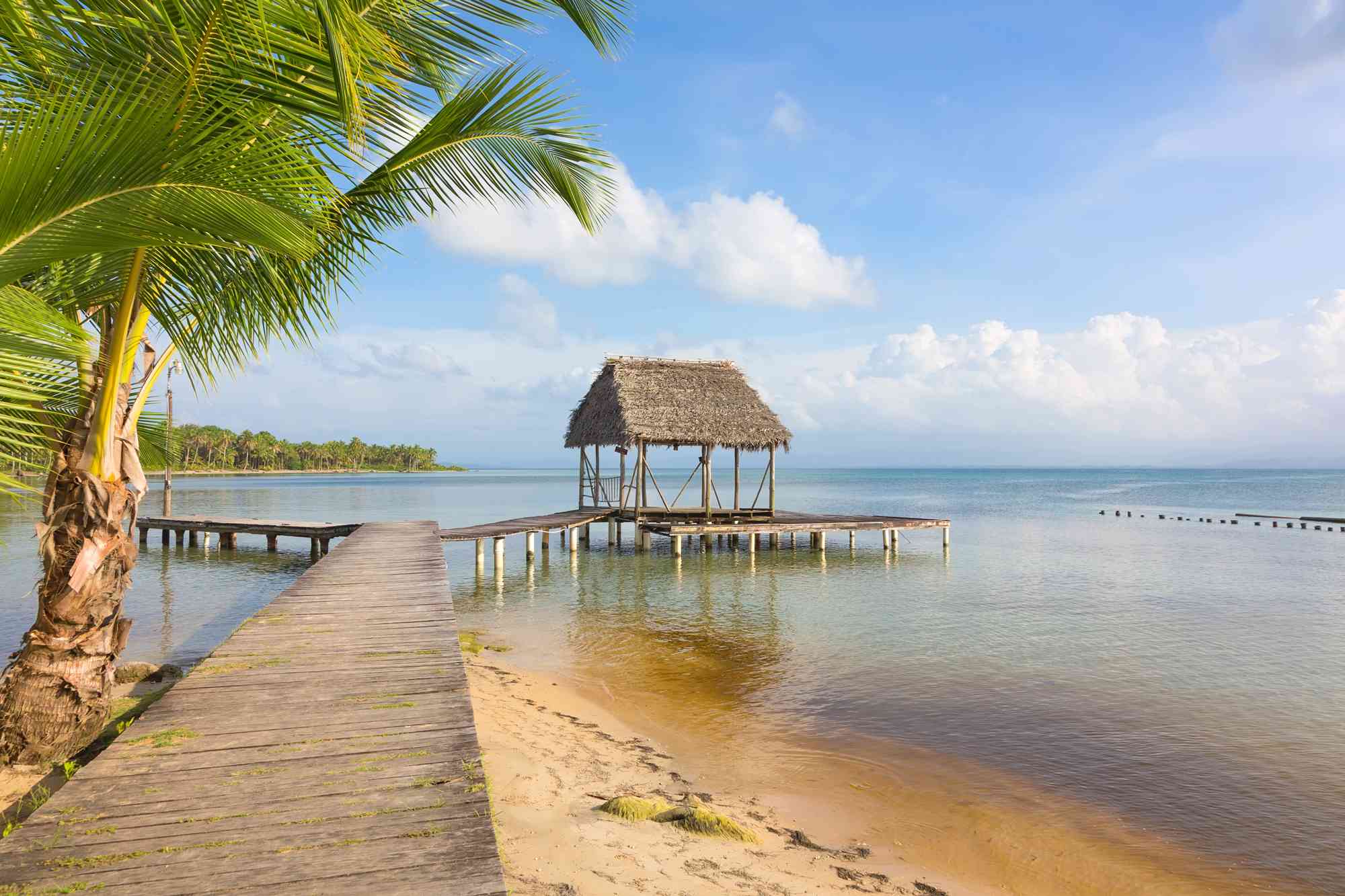
Panama's archipelago is where South Caicos was before the flag arrived. The luxury inventory is small and idiosyncratic rather than branded: Nayara's sixteen overwater bungalows, each with a plunge pool and an on-call captain; La Coralina Island House on Isla Colón with eight villas and 23 rooms; Urraca Island Eco Resort's six overwater bungalows; Sweet Bocas, fifty acres taking one group at a time across up to thirteen bedrooms and a 30-foot yacht. No global operator has planted a flag. That is the difference between the two islands, and it is a matter of a few years.
The tell is the food. Receta Michilá, on the back side of Isla Carenero, made the World's 50 Best Discovery list in 2025 on smoked river fish, plantain gratins and desserts built from local cacao. Restaurants get discovered before hotels do; capital follows the restaurant.
What the brochures underplay is that Bocas runs two economies on the same water taxis. The Blue Coconut, described as a quiet corner of Isla Solarte, is a Friday stop on the Filthy Friday bar crawl. Water taxis cost three to ten dollars, cash, and nobody is separating the overwater-villa guest from the backpacker. Some travellers will find that the appeal. Others will book Nayara and never leave the deck, which rather defeats the point of coming.
The Kohala Coast is the ending
Ask where Hawaii's money goes and the honest answer is no longer Maui. Kona Village reopened in 2023 after a twelve-year closure with around 150 hales and season rates north of $2,000, and has run full since. Four Seasons Hualalai, open since 1996, is among the highest-earning properties in that group. Auberge reportedly spent $200 million on Mauna Lani. The Mauna Kea Beach Hotel has been there since 1965, with 1,600 Asian and Pacific artworks on the walls.
That is what the quiet island becomes: not spoiled, but priced. The interval worth travelling in is the one between the first branded hotel and the second. South Caicos is about two years into it. Bocas has not started the clock.