The Map Has Moved: Reading the 2026 Hot List Against Last Year's Americas
Condé Nast Traveler's new-hotel list has quietly redrawn its American geography — from private islands to 200-key branded resorts in the Caribbean, from a Mexico-heavy South America list to an actual Peru-to-Brazil one, and, in the US, into old buildings.
Two hundred rooms at St Regis Cap Cana, from $664 a night. One hundred ocean-facing rooms at Salterra on South Caicos, from $726. Set those against the Caribbean entries the same list ran a year earlier — Peter Island, a private island in the BVI, from $1,000; the Potlatch Club on Eleuthera, eleven keys on twelve acres, from $775 — and the shift is not a matter of taste. It is a matter of capital structure.
The Caribbean traded keys for scale
The 2025 vintage rewarded owner-operators. Potlatch had a service team that had worked together for more than twenty years, coral-stone floors, a McCartney honeymoon in the provenance file. Peter Island ran on two wind turbines and reverse osmosis and a hospitality style the reviewer likened to staying with an aunt and uncle. Neither was scalable, and neither pretended to be.
This year the Caribbean entries are Marriott's two upper divisions. Salterra is Luxury Collection, one of the few resorts on an island of a thousand people, and it earns its place on staffing rather than architecture: an adventure team with two named marine biologists, Anna Zuke and Joey Plant, running the reef excursions; a five-course dinner at Brine where each dish is matched to a different flavoured salt, with a briefing on the salt industry that once paid for the island. The palette — creams, pale pinks — reads the salinas and the flamingos without turning them into a theme.
St Regis Cap Cana is the brand's first in the Dominican Republic, 200 rooms including 36 suites across sixteen beachfront acres, patterned brickwork, wickerwork ceilings, Dominican artists on the walls, a Jack Nicklaus course next door. It is competently done. It is also the least interesting reservation among the four American regions, and the review all but says so when it identifies the target guest as someone looking to instil envy on TikTok. Entry rates in the Caribbean fell year on year while room counts went up by an order of magnitude. That is the whole story of the region in one line.
The independents were not beaten on quality. They were replaced by balance sheets that can absorb 200 keys.
Mexico changed galleries
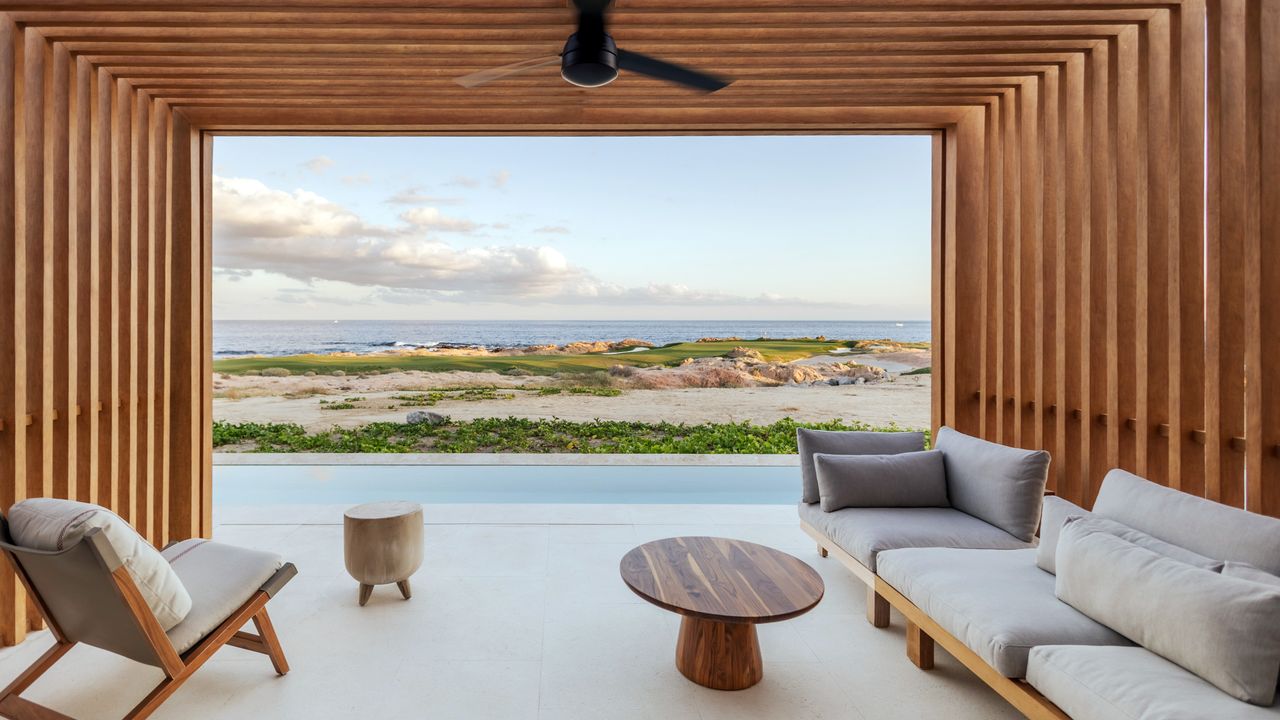
Last year Mexico was filed under South America and largely constituted it: Four Seasons Cabo del Mar from $1,380, and Banyan Tree Veya Valle de Guadalupe, thirty pool villas by Michel Rojkind with its own winery, from $339. This year Mexico sits with the Caribbean, and the two entries are both brand debuts of a kind. Park Hyatt Cabo del Sol is the group's first in Mexico — hard lines, linen-to-earth palette, a Syrian chef, Anas Mnla, running the North African and Levantine kitchen at Silán, and a beach club with no neighbours on either side. From $900. Cabo has now absorbed two major openings in two consecutive years, which tells you where the development money still feels safe.
Rosewood Mandarina, in Nayarit, is the second luxury hotel in the Mandarina development after the 2020 One&Only, and it is the rare resort where the room categories genuinely diverge: beachfront rooms within earshot of the surf, Flatlands suites near the pools and kids' club, mountain suites reached by golf cart and effectively a different holiday. From $1,100. Book the mountain if you want silence; book the Flatlands if anyone in the party is under twelve.
South America gets the South America list
With Mexico moved out, the Latin America gallery is finally Peruvian and Brazilian, and it is where the ambition has gone. Inkaterra Cabo Blanco sits on the old Cabo Blanco Fishing Club beach — Hemingway, Monroe, DiMaggio — built in sandstone, flattened bamboo and woven straw, with sunset runs on Miss Texas, the boat Hemingway fished from. From $228, the lowest entry rate anywhere on the American lists.
Tinajani, Andean's sixth property, is a tented camp at 12,900 feet in a 494-acre reserve reached by dirt road from Juliaca, with alpaca-wool blankets, wood-fire stoves and hot tubs against Inca and pre-Inca rock tombs. From $1,320. Uxua Maré, in Trancoso, is three solar-powered villas made from abandoned fazenda buildings relocated more than 250 miles, on fifteen acres of Atlantic Forest, fed daily from a fifty-acre agroforestry farm and cooked by Renata Buin. From $900.
These are small, independent and sold on terrain rather than frontage. A six-to-one price spread inside one country is what a list looks like when it is following operators instead of brands.
In the States, the money went into old buildings
The US and Canada entries are almost entirely renovation capital: the Waldorf Astoria after eight years, sidewalk to spire, from $1,500; $100 million at the 421-room Ritz-Carlton Key Biscayne; $25 million and a decade on a 120-year-old Tudor at Rosemead House; six years on Hotel El Roblar in Ojai, dark since the Thomas fire; a condemned 1940s adobe motor lodge reopened as the 49-room Hotel Willa in Taos, from $200; two 1920s Craftsman cottages that once housed Asylum Records now nineteen rooms as The Chloe Nashville. Naples Beach Club, A Four Seasons Resort, is new build, but on the footprint of the old Naples Beach Hotel & Golf Club, and it kept HB's and the Sunset Bar because those were the assets.
The Caribbean is buying scale, South America is buying remoteness, and North America is buying provenance it cannot manufacture. Of the three, only the second is producing hotels that could not have existed five years ago.