The 2026 Hot List Redraws the Map: Where Luxury Is Actually Opening
Read the year's global winners against the regional lists and a pattern emerges: Spain and Italy are absorbing more new openings than anywhere in Europe, Japan and India are running deep benches, and the Gulf has stopped being a single-city story.
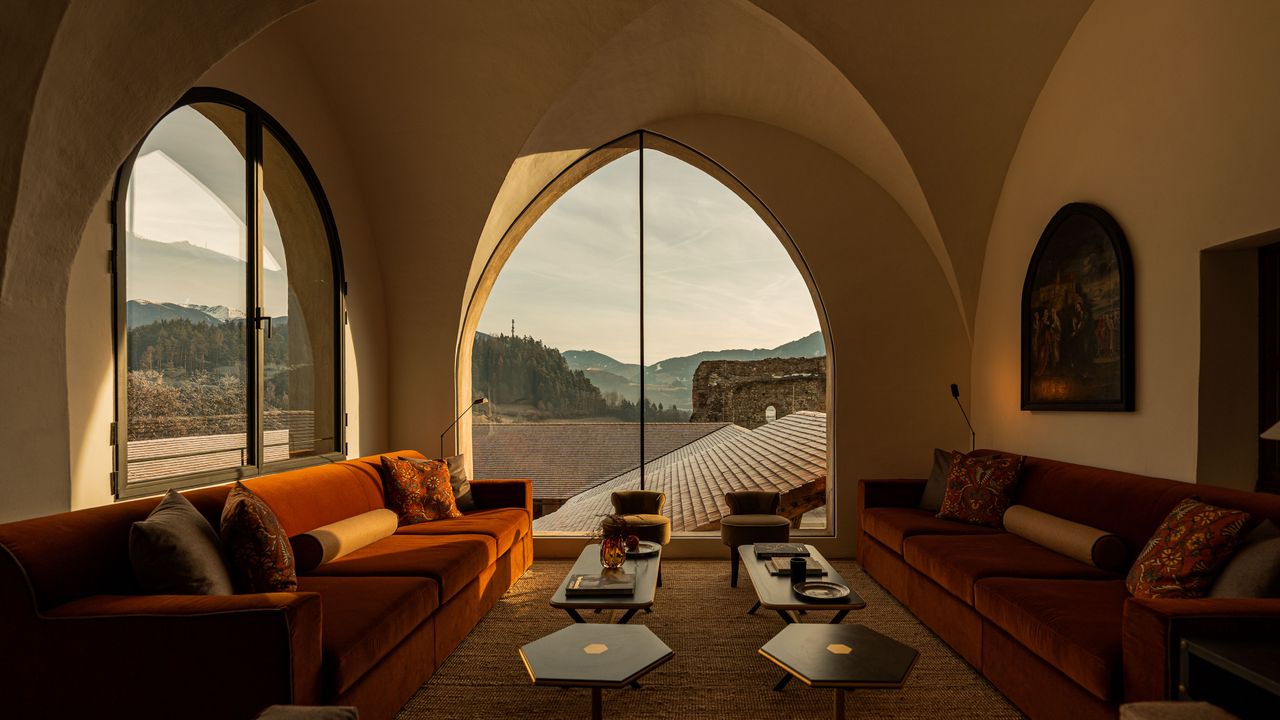
Count the Spanish entries on the 2026 Hot List and you get six: Madrid twice, Seville, Marbella, Barcelona, plus Portugal's Tavira just over the border. Count Italy and you get seven, spread across Rome, Milan, Florence, the Dolomites, Corsica's Murtoli — Corsican, technically, but running on the same rustic-luxe logic — and Forte dei Marmi. That is a third of the Europe and UK list concentrated in two countries. France, historically the reflexive answer to any question about European luxury, contributes one Paris hotel and one eight-suite château above Sancerre.
That imbalance is the most useful thing in this year's list. Where the money goes tells you where operators think the next decade's demand sits, and it is no longer distributed the way it was.
Spain is absorbing capital that used to go elsewhere
The Spanish openings are not variations on a theme. The Palace in Madrid is a 470-room grande dame brought back through a façade restoration covering more than 8,000 square metres and the dismantling, cataloguing and reassembly of a 1912 glass dome, 1,875 pieces at a time, by over a hundred specialists. From $526. Club Metrópolis, in the same city, is the opposite proposition: 19 rooms wedged into a landmark building alongside a members' club and seven restaurants, at $944. Seville's Cristine Bedfor takes a cinema derelict for two decades and gives it 28 rooms, each in a single colour, from $245. Don Carlos Marbella reopens with 308 rooms, a two-storey Natura Bissé spa with a full water circuit, and Spain's first Rafa Nadal Tennis Center.
The range matters more than the count. A market attracting both $245 boutique conversions and nine-figure grande dame restorations is a market with depth, not a fashion.
A third of the European list sits in two countries, and France is not one of them.
Italy keeps building on what it already owned
The Italian entries share a habit: they are almost all rescues. Corinthia Rome takes the 1920s Bank of Italy offices, closed for years, and puts its spa in the former vault. Castel Badia occupies a manor house dating to the year 1000 that has been courthouse, convent and castle. Collegio alla Querce was an aristocratic palace and then a school. Pensione America in Forte dei Marmi was an 1899 villa turned guesthouse in 1922, now reworked into a five-star hotel — where locals ask to tour it as if it were a museum.
What Italy is not doing is building anything new. Every Italian winner is a conversion. That is a constraint dressed as a strategy, and it produces genuinely distinctive rooms; it also means the Italian pipeline is limited by how many frescoed buildings remain unclaimed.
Japan and India are the depth stories in Asia
Japan takes four places: Fufu Ginza with 34 rooms and a private onsen in each, fed by volcanic water trucked ninety minutes from Atami; Gora Kadan Fuji with 39 suites and three villas; Waldorf Astoria Osaka, the brand's first in Japan; and the reopened Park Hyatt Tokyo after nineteen months dark. India also takes four — Fairmont Mumbai, Oberoi Rajgarh Palace at 65 keys across 76 acres, Mharo Khet outside Jodhpur, and Shakti's seven-room Prana in the Himalayan foothills — spanning $217 to $3,360 for three nights.
What distinguishes them from the Chinese entries is that both benches run deep in categories, not just cities. India has an airport hotel, a palace, a farm stay and a wilderness lodge. China has two: a Waldorf Astoria in Pudong and a nine-cabin Tibetan camp without running water. Taipei's Capella is described as the city's first ultra-luxury opening in more than a decade, which is less a triumph than an indictment of the previous ten years.
The Gulf has stopped being Dubai
Compare the 2025 vintage, where the Middle Eastern entries were Dubai's Delano, Saudi Arabia's Dar Tantora and Ritz-Carlton Reserve Nujuma. This year the region spreads to Doha's Lusail — Rosewood's 155 rooms plus 162 serviced apartments in a district planned for 200,000 residents and 22 hotels — and to Shura Island, where an estimated eleven luxury hotels were due to open by year's end. Red Sea Edition alone brings 240 rooms and 53 suites. Jumeirah Marsa Al Arab, at $2,000, closes out a Dubai trilogy rather than starting anything.
The Africa list, by contrast, is thin and expensive: eight entries, four of them safari lodges, with Wilderness Magashi Peninsula at $2,490 for three villas. Kenya, Rwanda, Tanzania, Morocco, Egypt. No southern African urban opening at all. The 2025 list at least had Botswana and South Africa's Wild Coast.
What is worth the booking
Cairo's Immobilia, a handful of apartments in a 1940s tower from $325, is the most interesting reservation on any of these lists — a real city hotel in a place where big brands buffer guests from the street. Aman Nai Lert Bangkok, on seven acres of former teak estate, earns its $1,100. Somewhere in the Maldives, at $17,918, is a number that only makes sense as a buyout, and its second phase does not open until April 2026.
The list's weakest link is the mid-market conversion in a secondary European city: competent, photogenic and increasingly interchangeable. Frankfurt's Florentin, trimmed to 147 rooms with a doubled spa, is the good version of it. There will be a dozen bad ones.