Six tiers of bench, or a cabin for one: the spa has split in two
At one pole, a 300-person sauna outside Verona with an LED wall and opera choreographed to the Aufguss. At the other, a private heat room on a villa deck. Between them sits the more interesting work: water, and what it is actually being asked to do.
One hundred and eighty square metres of Hemlock and Ayous. Six tiers of bench. Room for 300 people at once, and behind the panelling a control room synchronising a panoramic LED wall, immersive audio, entertainment lighting and theatrical water effects. This is the Desert Sauna at Aquardens, the thermal park outside Verona, and it is officially the largest sauna in the world. Its architect and spa designer, Claudia Taiani, calls the idea wellness theatre, and for once the phrase is literal rather than promotional: the amphitheatre layout was the thing that made a partnership with the Verona Arena Foundation possible, so that Verdi and Bizet are now performed to guests sitting in the heat.
The engineering problem was heat distribution. Get 300 bodies onto six levels and the top row cooks while the bottom row wonders what the fuss is about, so the airflow dynamics and the output of the central heaters were calculated to keep temperature uniform across the tiers. Everything industrial is concealed. The room reads as wood, which is the point.
What interests me more than the record is the part that follows. Taiani's scheme runs to 385 square metres in total, and the balance is the Desert Oasis, a lounge in earth tones and reds with dune forms picked out in LED strip, a central island for food and cocktails, and dedicated provision for coffee and tea rituals. That is not decoration. The sauna cycle is heat, thermal shock, hydration, rest, and most operators build the first two and treat the last two as circulation space. Aquardens has given rest roughly as much floor area as the record-breaker.
The cabin for one
At the opposite pole is the in-suite sauna, currently being sold hard to hotels as the answer to the crowded thermal floor. The pitch is straightforward: a guest off a ten-hour flight wants heat without strangers, at a temperature they choose, somewhere between 65 and 90 degrees, for fifteen or twenty minutes, with the cabin pre-heated from a phone app before they get back from dinner. Alpine villas are fitting timber cabins on private decks so that guests can step from the heat into mountain air. For anyone genuinely recognisable, the argument about privacy during recovery is real and does not need padding.
The padding arrives anyway. The trade case for private heat rooms leans on claims that these features make stays memorable for 100 percent of guests, that efficient heaters cut consumption by 40 percent, and that hundreds of resorts will follow. Those are numbers written to be repeated, not checked. The physiological material underneath is sturdier and more modest: regular heat exposure is being studied as a non-pharmacological way of lowering cardiovascular risk, three sessions a week is the figure that keeps appearing, and frequent sauna use combined with cardiorespiratory fitness tracks with lower rates of mental disorder.
A two-metre cabin on a deck can deliver heat. It cannot deliver the alternation, and the alternation is the treatment.
The deck cabin's real limitation is structural. Without a cold plunge within a few steps and somewhere to lie down afterwards, the private sauna is a warm box in which you sweat and then walk to bed. The properties doing this properly pair heat with cold in the same private footprint. The rest are selling square footage.
What the water is for
The water side of this is where the ambition has gone. At Sense, A Rosewood Spa at Rosewood Mayakoba, Float and Glow runs between 8pm and midnight: a floating mat, jungle overhead, therapists working singing bowls in the air and occasionally on the body. It is part of a run of evening treatments aimed at sleep, and as a sleep intervention the timing is the clever bit; the vibrational massage claim is the softest thing on the menu. At Habitas Bacalar, on the Lagoon of Seven Colors, Janzu puts a nose clip on you and a shamanic aquatherapist beneath you for a sequence of over- and underwater movement. Meraki, newly opened on Grand Cayman, runs a 90-minute hammam with foam, scrub and warm water poured over you throughout: the oldest protocol here and still the most reliably worth 90 minutes.
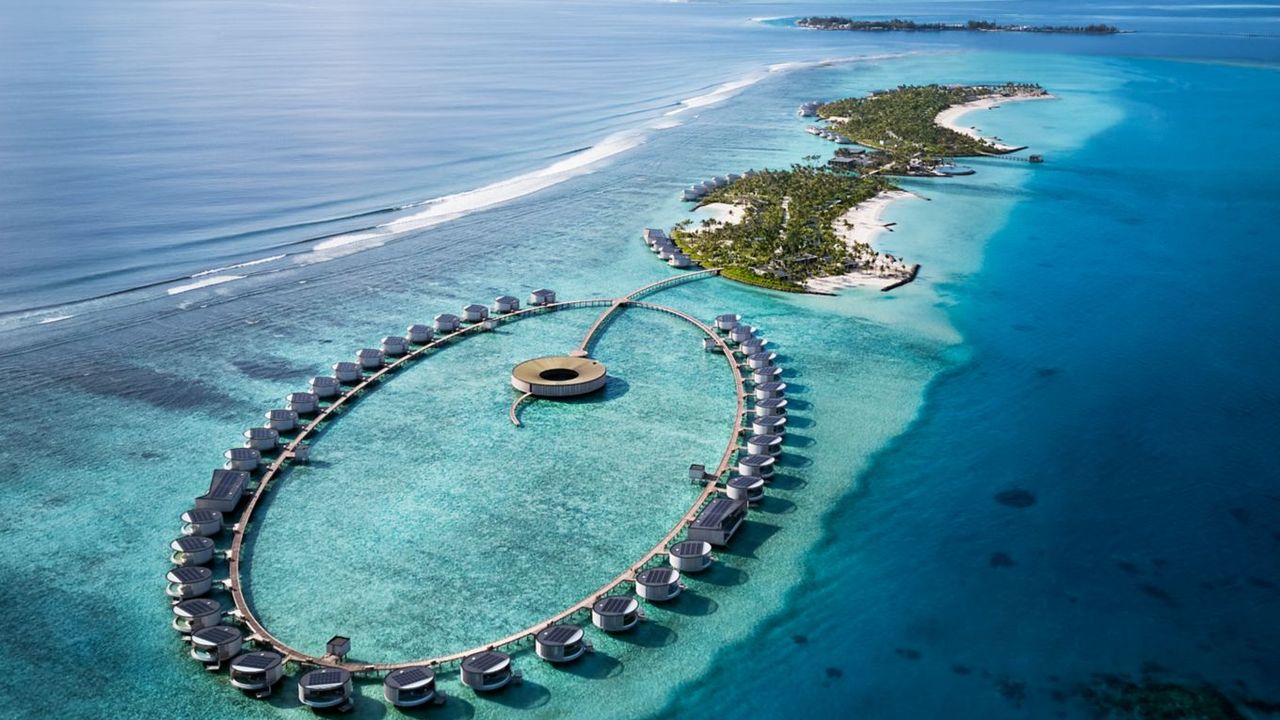
Two stand out for opposite reasons. Blue Awakening at the Ritz-Carlton Maldives, Fari Islands, takes participants to the lagoon floor in scuba gear to breathe and sit still, led by Vincent Meurice, an instructor and meditation specialist, in 45- or 60-minute sessions with no experience required. It is the only treatment on the list that happens inside the ocean rather than in homage to it. It is also a group session, which is an odd way to sell nervous-system reset. Ice diving at Ultima Courchevel, ten minutes away in Lake Le Praz in a dry suit, is a sport with a wellness label on it, and none the worse for that.
The quietest is the Himalayan Stone Bath at Amankora Paro: river stones heated and lowered into the water, local Khempa herb, thirty minutes. No LED wall, no soundtrack, no partnership with an opera house.