Puglia Is Better After Summer
When August ends, Puglia doesn’t close for the season. The Adriatic is still warm, the masserie settle back into their rhythm and the towns of the Valle d’Itria become places to wander rather than navigate around crowds. September may be the better version of an Italian summer.
There is a point toward the end of August when Italy begins to change.
The beach clubs are still open and lunch still runs late, but the urgency starts to disappear. Families head home. Roads clear. Reservations become easier. The light changes slightly.
In Puglia, this is when things get interesting.
September keeps much of what people come south for in July and August—the sea, long afternoons, dinner outside—but removes some of the effort required to enjoy it. The weather remains warm, the Adriatic holds onto the heat of summer, and the towns begin to settle back into their own rhythm.
It makes the stretch between the coast and the Valle d’Itria particularly good at this time of year.
Base yourself near Savelletri and there is very little reason to make a complicated itinerary. Swim in the morning. Drive inland when you feel like lunch.
Ostuni rises white above the olive groves. Cisternino is small enough to wander without a plan. Locorotondo is better approached slowly. Alberobello is still Alberobello, but September gives you a better chance of seeing beyond the crowds that came for the same photograph.
And then there is the countryside.
The landscape here is not decorative background. Dry-stone walls divide fields of ancient olive trees. Trulli appear between vineyards. Masserie that once functioned as fortified farmhouses have become some of the region’s most interesting places to stay.
As summer gives way to autumn, attention begins shifting back toward the land: vineyards, new wine and eventually the olive harvest become part of the rhythm again.
This is the Puglia that makes more sense after peak summer.
Stay at Borgo Egnazia
Just outside Savelletri, where the Valle d’Itria meets the Adriatic, Borgo Egnazia is one of the easiest places from which to explore the region.
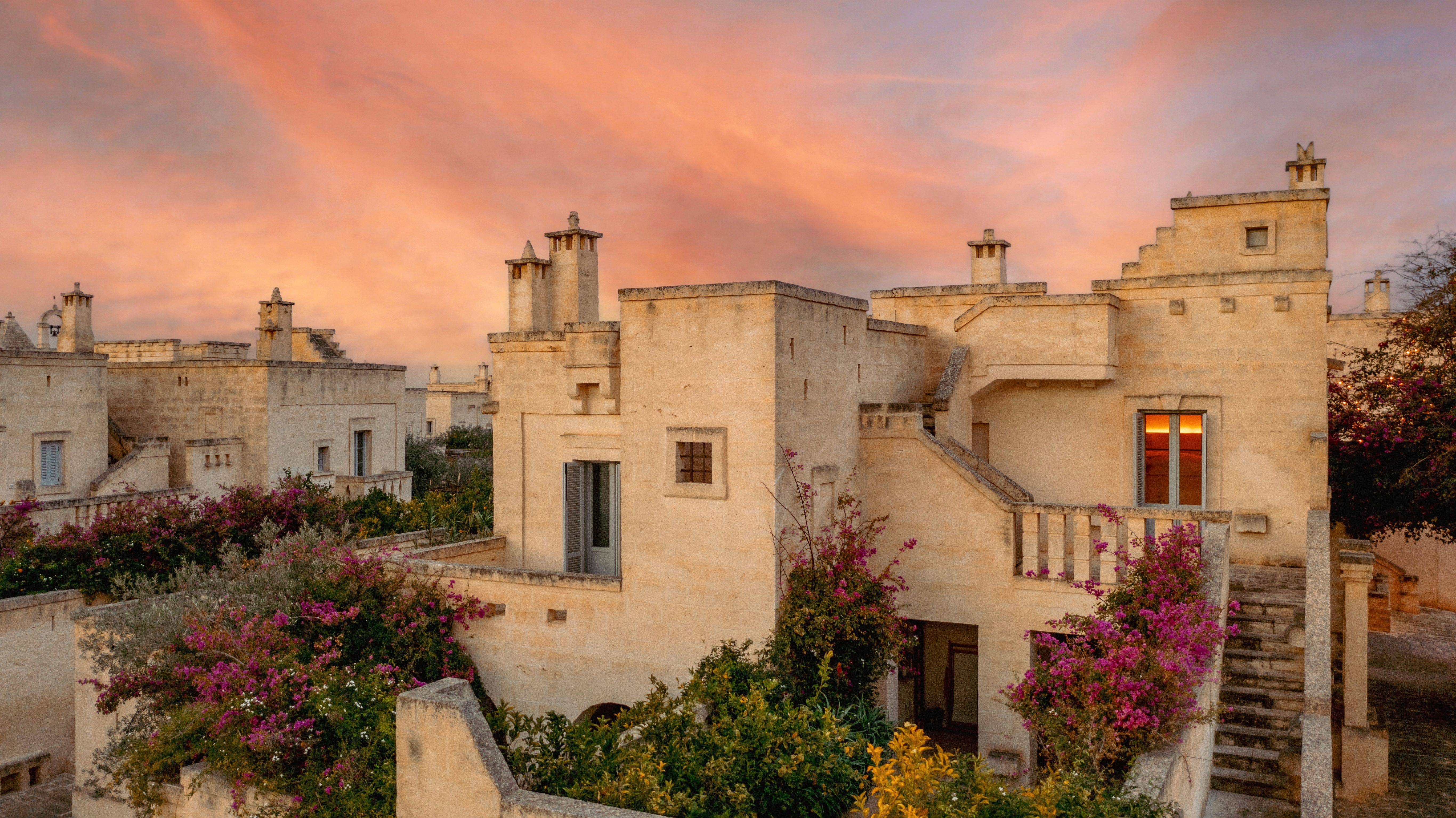
The property was conceived as a contemporary interpretation of a Puglian village rather than a conventional resort. Pale local stone, narrow lanes, courtyards and gardens divide it into La Corte, Il Borgo and the private Case, with the Adriatic nearby and olive groves stretching inland.
There are two private beaches, Cala Masciola and La Fonte, as well as Vair Spa and San Domenico Golf, set among ancient olive trees overlooking the sea.
But the reason to stay here in September is not to remain inside it.
From Borgo Egnazia, the coast and the Valle d’Itria pull in opposite directions. One morning can begin by the Adriatic; lunch can happen inland beneath the stone arches of a masseria; the afternoon can disappear somewhere between Cisternino and Locorotondo.
Come back when you want to.
That is the luxury of Puglia after August: very little needs to be conquered.
There is no reason to collect towns or turn every masseria into a reservation. Some days should amount to a swim, a plate of crudo, an unnecessarily long lunch and another swim before dinner.
September gives you permission to travel that way.
Puglia has not become empty. Nor should it. The restaurants are still alive, the hotels are still running and the coast hasn’t gone into hibernation.
It has simply exhaled.
And when summer elsewhere starts feeling finished, that may be reason enough to go south.