One Treatment Room, Fifty-Nine Suites: The New Arithmetic of Wilderness Wellness
Arcora in Finnish Lapland, a nine-suite lodge coming to the Uluru dunes, Segera in Laikipia and a carbon-positive merino station in Central Otago all point the same way: the landscape is doing the work the spa used to do.
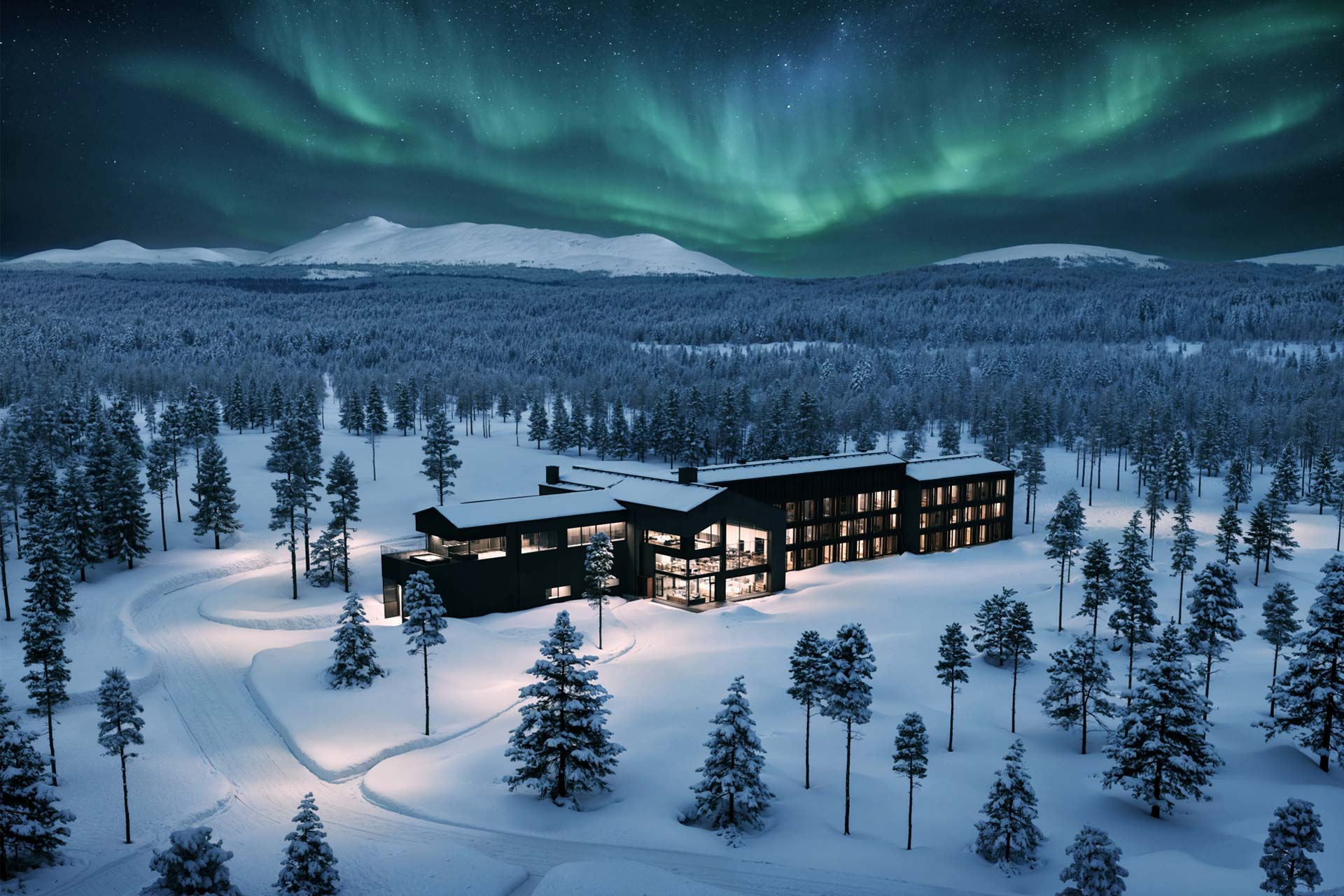
Fifty-nine suites and villas. Three saunas. One massage and treatment room.
That is the wellness arithmetic at Arcora Boutique Hotel & Villas, the Harriniva group's new build for the 2027 Arctic season at Torassieppi, in Muonio, on the edge of Pallas-Yllästunturi National Park. Read as a spa programme it looks thin. Read as a statement of intent it is unusually clear. Arcora is not planning to sell treatments. It is planning to sell heat, cold, dark and light, and it has built exactly enough infrastructure to deliver them.
The spa sits on the top floor with views across the fells: a heated rooftop infinity pool, an outdoor jacuzzi, the three saunas, relaxation areas. The rooms carry their own version of the same logic. Executive Suite Jussi has a private sauna with a view. Sky Villa Antti has a panoramic heated ceiling window over the bed, which is a piece of engineering aimed squarely at the aurora. Deluxe Villa Jouni has an outdoor hot tub, a design fireplace and a kitchenette. Nobody is being asked to walk to a treatment corridor in a robe.
The capex argument nobody makes out loud
There is a flattering way to describe this shift and a truthful one, and both are worth holding at once. The flattering version is the one Pyry Talvensaari, the third-generation CEO of a family company operating in Lapland since 1973, gives when he talks about the landscape's "extraordinary capacity to restore" and a place that "leaves its mark long before you're ready to leave." The truthful version is that a full spa is among the most expensive square metres in any hotel, it needs a large therapist roster in a region where recruitment is hard, and it earns money only in the hours guests are indoors. A rooftop pool and a sauna block cost a fraction of it and photograph better.
Which is not an accusation. It is simply what makes the trend durable. When the money moves out of the treatment wing it has to reappear somewhere, and the interesting question about each of these properties is where.
The treatment protocol is a landscape, a guide and a schedule, and the only equipment is a vehicle and a bed in the open air.
Nine suites and no spa at all
At Uluru-Kata Tjuta, Beckons is going further. Its first new build since the brand launched in March 2026, approved after ecological, heritage and sacred sites assessments and consultation with Traditional Custodians, is a nine-suite lodge set low in the red dunes adjacent to the national park, designed by JAWS Architects. Eight Desert Suites and one multi-room Desert Pavilion, each with a plunge pool and an outdoor daybed made up with swags for stargazing. Views of Uluru from every suite and from the restaurant, bar and lounge. No spa is mentioned anywhere in the plans.
Instead the investment is cultural and human: commissioned works in each suite interpreting Kungkarangkalpa, the Seven Sisters Creation story; ongoing partnerships with Ernabella Arts, Tjanpi Desert Weavers, Tjala Arts and the APY Centre Collective; guides leading guests through Country. Opening is projected for early 2028, with the name still unannounced. Nine keys in that location, with that guide ratio, is a defensible position. It is also a bet that at multi-million-dollar build cost, guests paying Longitude 131° money will not ask where the hammam is.
Where the landscape actually delivers
Segera, on the Laikipia Plateau, shows the mature version. Ten villas above botanical gardens on a private 50,000-acre conservancy, 40 minutes' flight from Nairobi, malaria-free, with Eastern black rhino back on the plains since 2025 after 60 years away. There is a spa, and it is listed alongside art walks and sundowners rather than above them. Every villa has a private vehicle. Every deck has a swing bed and a sunken bath. The thing worth booking is the Bird's Nest sleepout, a bed above the bush with 360-degree views to Mount Kenya, which no treatment room on the continent can approximate.
Lake Hāwea Station, in Central Otago, dispenses with the pretence entirely. Two residences: Packhorse Cottage, with shepherd notes on the walls dating to 1941, and Homespur, a studio with a pot belly stove. Each has a fire pit and a hot tub. That is the wellness offer. What the station spends on instead is the land itself: Australasia's first certified carbon-positive farm at roughly 2.5 times capture over emissions, the first merino operation with B Corp status, seven kilometres of fenced lakefront, more than 27,000 native trees planted. Deeper Dining takes guests into a regenerative paddock at sunset for a menu drawn from foraging within sight of the table.
The risk in all of this is weather, and nobody is honest about it. A rooftop infinity pool north of the Arctic Circle in a January whiteout is a very different proposition from the rendering. Costa Rica already knows the trick, in the least designed form available: Río Perdido's mile-long thermal river through a canyon near Bagaces, mud pots, paintbrushes for the clay, high mineral content, howler monkeys. Two other guests in the whole of it. That is the benchmark the new lodges are building towards, and it cost nobody anything.