Why Montenegro Is Becoming Europe's Next Luxury Destination
Montenegro is quietly emerging as one of Europe's most compelling luxury destinations. New hotels, branded residences and waterfront developments are transforming the country, while medieval towns, dramatic mountains and the Adriatic coastline preserve the authenticity that first made Montenegro a hidden gem.
Why Now?
The transformation did not begin with the arrival of international hotel brands. It began with confidence.
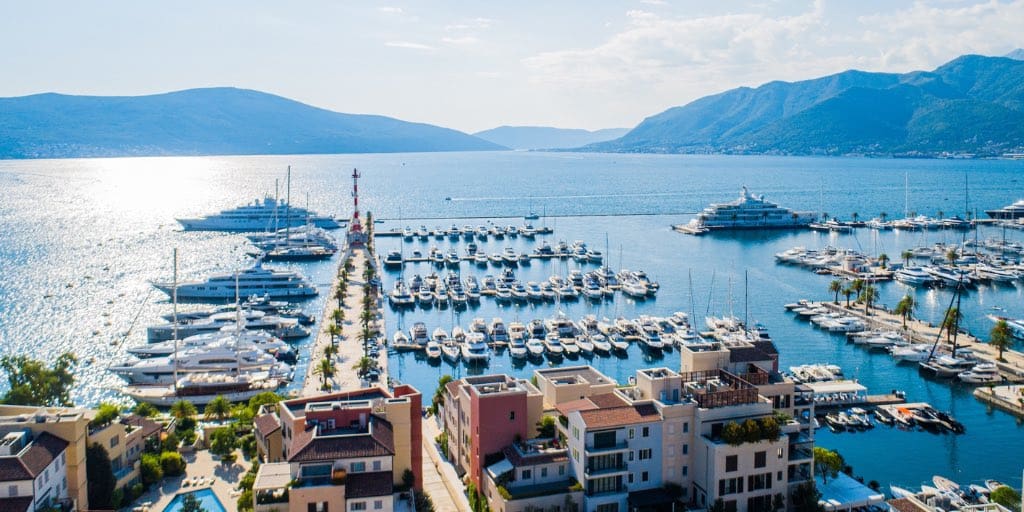
The redevelopment of Porto Montenegro, once a former Yugoslav naval shipyard, demonstrated that there was demand for a luxury Adriatic destination capable of attracting superyachts, international homeowners and affluent travelers looking beyond the Côte d'Azur or the Amalfi Coast. The marina became proof that Montenegro could compete on a global stage without attempting to imitate its Mediterranean neighbors.
From there, momentum accelerated.
Improved infrastructure, expanding private aviation, growing international awareness and sustained foreign investment have steadily reshaped the country's tourism landscape. At the same time, luxury travelers have begun searching for destinations that offer authenticity alongside exceptional hospitality—places where historic towns, dramatic scenery and contemporary luxury coexist rather than compete.
Montenegro offers exactly that.
Within a single day, visitors can wander the UNESCO-listed streets of Kotor, have lunch overlooking the Bay of Kotor, step aboard a yacht in Porto Montenegro and finish the evening on Budva's coastline. Few destinations in Europe offer such variety within such remarkably short distances.
A New Generation of Luxury Hotels
The country's next chapter is now being written by some of the world's most recognizable hospitality brands.
In Budva, Nobu Hotel, Restaurant and Residences will introduce the brand's signature combination of luxury accommodation, acclaimed dining and branded residences. More than simply another hotel opening, the project reflects growing confidence that Montenegro can support an increasingly sophisticated international clientele throughout the year.
Further down the coast, InterContinental Resort Amma Canj represents another significant milestone. Set between the Adriatic Sea and Montenegro's rugged mountains, the resort is expected to strengthen the country's appeal among travelers seeking privacy, wellness and understated luxury rather than highly commercialized beach destinations.
Yet Montenegro's ambitions extend well beyond its coastline.
In the mountainous north, Pullman Kolasin Breza and Radisson Blu Hotel & Resort Kolasin are helping reposition Kolašin as a genuine four-season destination. Long known for skiing during the winter months, the region is increasingly attracting visitors for hiking, cycling, wellness retreats and outdoor experiences throughout the rest of the year. Together, these projects signal an important evolution: Montenegro is no longer marketing itself solely as a summer destination.
At Luštica Bay, one of the country's largest long-term master-planned developments continues to expand with new hotels, residential neighborhoods, retail and hospitality experiences. Rather than functioning as a traditional resort, Luštica Bay is being developed as a year-round waterfront community, reflecting a broader shift toward destinations where visitors increasingly choose to become seasonal residents.
More Than New Hotels
What makes Montenegro particularly compelling is not simply the number of luxury hotels under development, but the diversity of experiences they connect.
Unlike destinations that revolve around a single resort or stretch of coastline, Montenegro combines dramatically different landscapes within a remarkably compact geography. Medieval Venetian towns sit beside modern superyacht marinas. Quiet fishing villages remain only minutes from internationally branded resorts. Mountain peaks rise less than an hour from the Adriatic.
That contrast has become one of the country's greatest strengths.
Luxury travelers are increasingly seeking destinations that feel layered rather than manufactured—places where centuries of history continue to shape everyday life instead of serving merely as a backdrop for tourism. Montenegro still offers that balance.
Its Romanesque churches, Venetian fortifications, stone villages and winding coastal roads remain as much a part of the experience as its new hotels and marinas.
Looking Ahead
Montenegro's luxury transformation is still in its early stages.
Additional hotel brands, expanding infrastructure and continued international investment will almost certainly elevate the country's global profile over the coming decade. The greater challenge will not be attracting visitors—it will be preserving the authenticity that attracted them in the first place.
Luxury travel has reshaped countless Mediterranean destinations over the past half-century. Some have become global icons. Others have gradually lost the very qualities that made them special.
Montenegro still sits between those two outcomes.
The cranes are visible, the hotel brands are arriving and investment continues to accelerate. Yet medieval towns, quiet harbors and dramatic mountain landscapes continue to define the country as much as its new developments.
Whether Montenegro can preserve that balance may ultimately determine not only the success of its luxury tourism industry, but whether it becomes simply another fashionable destination—or one of Europe's most enduring.