Four Openings, One Argument: What the Big Operators Are Buying Now
Six Senses lands in a 1911 department store, Valor puts 42 keys yards from the Old Course, JW Marriott pitches 19 tents on a rhino conservancy and Fairmont books a 2028 arrival under Mount Yotei. The common thread is proximity, not design.
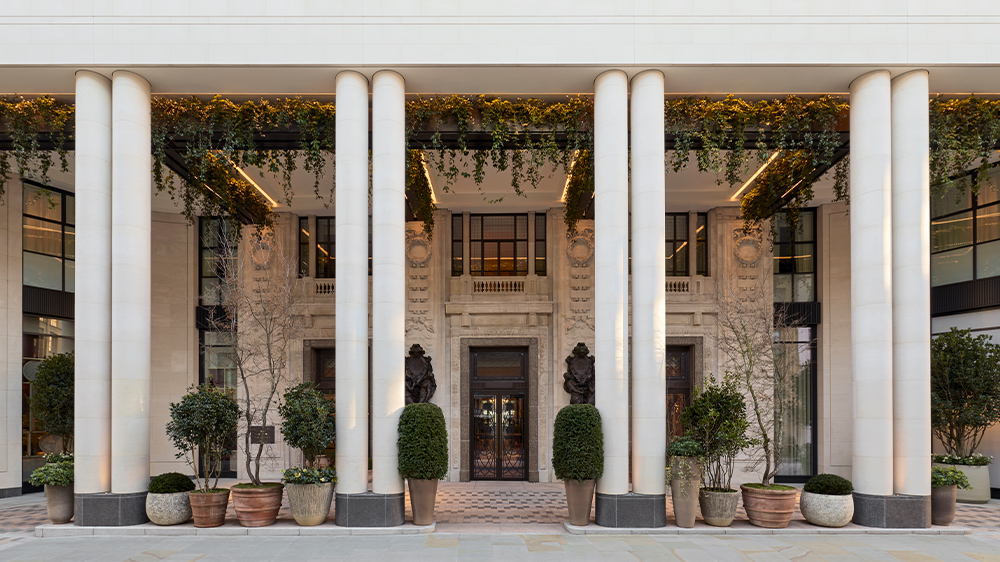
Four steps. That is how much longer the marble staircase at the Whiteley is than it was in 1911, after Foster + Partners and EPR Architects had millions of pieces of marble and wrought iron taken apart, cleaned and refitted by hand. It is an absurd amount of effort for a detail almost no guest will register, and it tells you what Six Senses has actually bought in London: not a site, but a building with a biography.
Set that against three other openings announced or delivered in the same short window, and a pattern emerges that has nothing to do with design language. Valor Hospitality Partners and the US owner Links Collection opened Seaton House at St Andrews, yards from the 18th green at the Old Course, alongside Dunluce Lodge overlooking the fourth fairway at Royal Portrush. JW Marriott opened a 19-suite tented camp inside the 45,000-acre Solio Game Reserve in Laikipia. Fairmont confirmed a 165-key resort at Niseko, with views to Mount Yotei, for early 2028. In every case the scarce asset is next door. The hotel is the toll booth.
The department store trick
Six Senses London occupies the mixed-use redevelopment of one of the city's original department stores, William Whiteley's rival to Harrods and Selfridges, and the interiors by AvroKO make the retail lineage explicit rather than tasteful. Glass vitrines and timber cabinetry in reception hold botanical specimens and kombucha dispensers where goods once sat. Adam Farmerie, AvroKO's founding partner, is candid that the studio lifted merchandising strategy wholesale: display cases, focal points, lighting, choreographed movement, all pointed at immersion rather than transaction. It is an honest admission, and it explains why the ground floor reads as a sequence of departments rather than a lobby.
There are 109 guestrooms and suites, and nearly all of them have Crittall-style glazed showers modelled on the bathrooms at Maison de Verre in Paris, with linen curtains for anyone unwilling to perform. That is a decision the brand will hear about, and it is worth knowing before you book for two people who are not intimate. The spa is the more interesting room: plaster vaults and arches flanking the pool, corridors lit to suggest underground water, and an Alchemy Bar of oak cabinetry, tincture bottles and drying herbs where workshops and consultations happen. The Earth Lab and the members club, Six Senses Place, are the parts a hotel guest is least likely to need and the parts the P&L probably depends on most.
The hotel is the toll booth. What the guest is paying for stands just outside it.
Yards from the 18th
Seaton House is two mid- to late-19th-century buildings joined in the 1930s to make The Scores Hotel, now restored into 42 rooms, six suites and three junior suites. The design case is Scottish landscape and golf heritage: stag-patterned curtains, thistle-embroidered cushions, argyles, plaids and tweeds, commissioned work from UK artists in every room. The detail that could have tipped into pastiche and does not is the tartan programme, which uses the Rea family tartan in honour of the original architect George Rae, and the family tartans of the tradespeople who did the renovation, woven into bespoke bed throws. It is a generous idea, cheaply executed in the best sense.
Dining is under chef patron Roy Brett across three rooms: Bow Butts Bar in earthy greens and warm wood, the Ondine Oyster Bar working sea and land, and the Board Room, built on the premise of eating in someone's kitchen, with an open kitchen, a copper thistle chandelier and a wall of antique mirrors. The Board Room is the table to chase. In a town where the Old Course dictates everything, a 42-key hotel with a serious open kitchen at that address will be booked out by golfers who never leave the building.
The two ends of the scale
JW Marriott's Solio camp is the cleanest expression of the proximity trade. Nineteen tented suites by LW Design, low timber and canvas, roll-up walls, plunge pools, freestanding indoor baths, on a private conservancy between Mount Kenya and the Aberdares. Furniture and art come from Kenyan makers, and the boutique carries pieces from the Solio Women's Empowerment Project with proceeds returned to it. Dining runs off an on-site garden, with the Garden Table set inside the garden and Mavuno cooking Kenyan-inflected menus over open fire. Nineteen suites across 45,000 acres is a ratio no city hotel can approach.
Fairmont Niseko is the outlier and the one to reserve judgement on. Two restaurants, a spa, a kids' club and onsen for 165 keys on nine acres is a thin service ratio by the standards of the other three, and 2028 is a long way off. Powder is the asset; the building is a mechanism for standing on it.