Cannes in August: The Croisette When the Carpet Is Rolled Up
The film festival is the town's advertisement. High summer is the town as it actually functions: market cooks at dawn, ferries to the Lérins, and a fireworks soundtrack piped through a boat radio.
The most useful piece of equipment in Cannes in August is a radio. Not for the news. During the city's International Fireworks Festival, where competing countries stage displays choreographed to music through the summer, the soundtrack is broadcast rather than piped across the bay, so the boats anchored opposite the Croisette hotels tune in and wait. When the last shell goes up, every skipper sounds a horn. Marisa Hordern, the founder of Missoma, has watched it as a child, then as a teenager with friends, now with her son and a scrum of nieces and nephews. Forty years of summers, from a family house twenty minutes outside town.
That continuity is the argument for August. May belongs to the festival, which is essentially a trade fair with a red carpet attached, and the town performs accordingly. In high summer the performance stops and the infrastructure remains: a covered Provençal market, a fifteen-minute ferry to two walkable islands, a shopping street that is not a scrum, and a run of beach clubs that will feed a family of six at two in the afternoon without a flicker.
Start at Marché Forville
The terracotta-coloured Marché Forville, at the foot of the old town, is where a good many Riviera kitchens buy their produce, seafood, cheese and Italian charcuterie. Go early, eat socca standing up, and buy a picnic for the boat rather than paying island prices for it. Above the market is Le Suquet, a thousand years of sloping lanes and vaulted passageways, plus the Suquet des Artistes, a studio and gallery space given over to four Cannes-based contemporary artists. The 109 steps up the medieval watchtower at the Musée des Explorations du Monde, a former castle and convent, buy a view over the bay and the Lérins that is worth the climb before eleven and punishing after it.
The water is the point
Everything good about a Cannes August happens offshore. The ferry from the Port of Cannes takes a quarter of an hour to Sainte-Marguerite, where Fort Royal holds the cell associated with the Man in the Iron Mask, and to Saint-Honorat, where the monks sell their own wine. Six submerged statues sit off Sainte-Marguerite's southern shore, part of Jason deCaires Taylor's underwater museum, shallow enough for a competent nine-year-old with a mask.
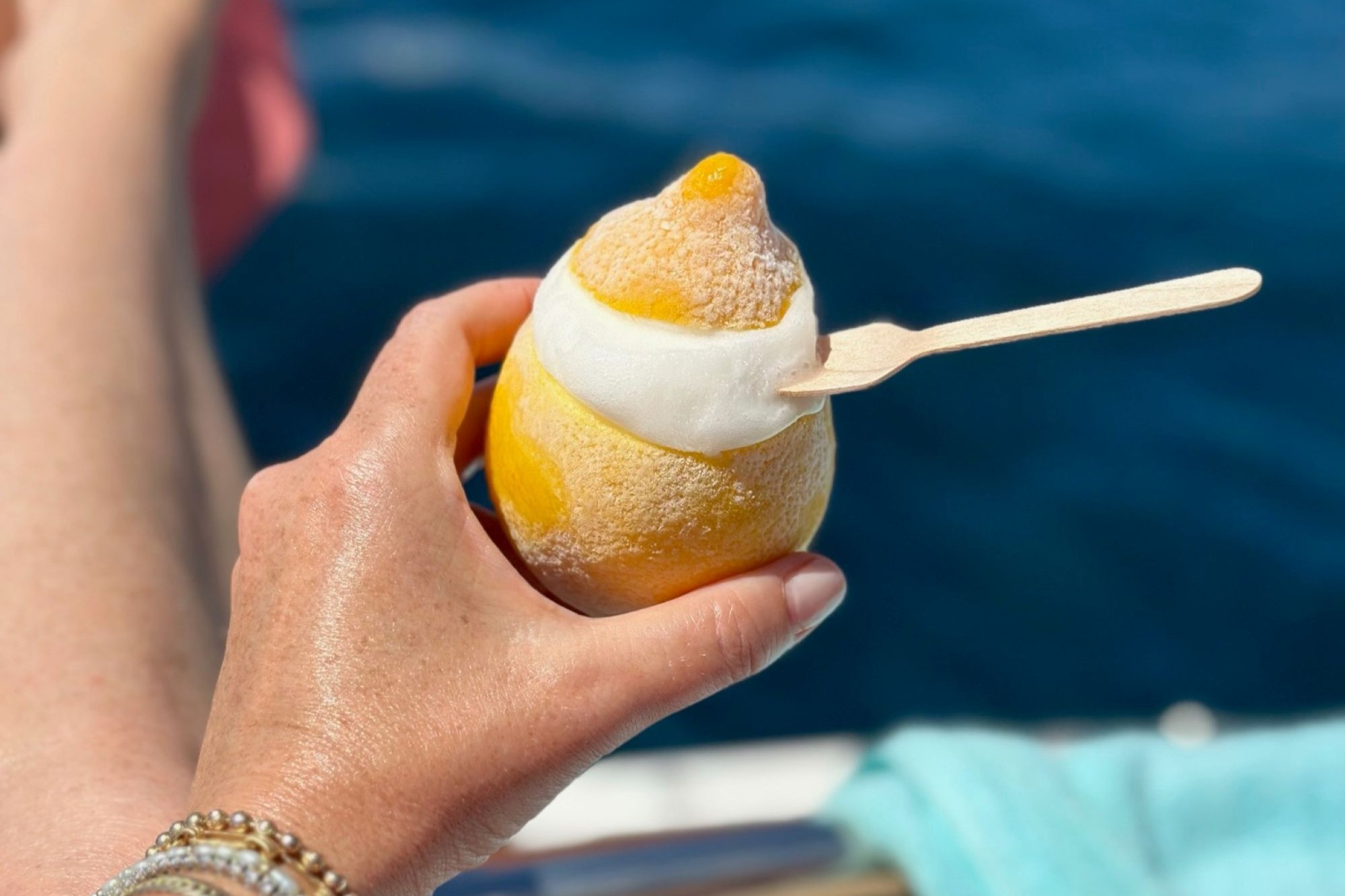
Hordern's version involves hiring a boat and staying out: waterproof shoes so you can swim ashore and walk, a pizza run from the sailboat permanently moored nearby, seabobs for the teenagers, and a citron glacé, lemon sorbet in a frozen shell, flagged down from the passing ice cream boat. This is the sort of detail that separates people who summer somewhere from people who visit it.
May belongs to the festival. August belongs to the market cooks, the ferry timetable and the long lunch.
Which table is worth the effort
La Guérite, on Sainte-Marguerite, is the hardest reservation on the coast and the only one I would chase. The Athenian-born chef Yiannis Kioroglou also runs Anna on the Croisette; order the honey-drizzled feta filo, the aubergine finished at the table, and the catch of the day. Book the early sitting. The late one drifts into DJs and dancing until sunset, which is a fine evening and a poor one with children in it. If nothing is available, Anna delivers the same kitchen with less logistics.
On the mainland the useful addresses are plainer. Da Laura for hand-rolled pasta with almost nothing on it. Chez Vincent et Nicolas in the old town for tartare, escargot and roast duck. Pastis for brasserie food on worn parquet, better at dinner than at lunch. La Pizza Cresci is the standard family fallback, and La Plage Belles Rives is the family lunch, at a hotel whose Art Deco bones, Fitzgerald history, pontoon and watersports genuinely absorb both generations.
At the Martinez, the beach club plays its film references straight, with director's chairs named for James Dean and Harrison Ford, charcoal-grilled local fish and stuffed courgette flowers. Ask for a bed on the pontoon or do not bother. Upstairs, La Palme d'Or under Jean Imbert cooks to the town's fishing-village origins, ember-grilled spiny lobster flambéed with cognac-smoked tomatoes and samphire, and the speakeasy-style Martinez Bar below it spins rare vinyl for people who have already eaten. The revived Palm Beach complex, Hispano-Moresque with Art Deco trim, houses La Petite Maison and Zuma and a frescoed casino. Zuma's terrace at sunset earns its place. Cabaret Medusa, feathers and sequins, is the most confected thing in a summer that otherwise does not need help.
The honest caveat
Hordern's own preference is May, June and September, when the heat is manageable, and she is right on the weather. What August has instead is social density: children finding their friends from last summer, three generations at one table, cobbled streets that argue for a block heel rather than a stiletto. Take the inland days seriously, because they are the relief valve. Fondation Maeght and its sculpture garden above Saint-Paul-de-Vence, lunch at La Colombe d'Or, the antiques dealers at L'Isle-sur-la-Sorgue, a swim in the Gorges du Verdon. Nice airport is close enough that none of it costs a day.